
Artists
SoA
SoA (이치훈, 강예린)
SoA (Chihoon Lee, Yerin Kang)
Introduction
SoA (이치훈, 강예린)
SoA(Society of Architecture)는 건축가 이치훈과 강예린으로 구성된 듀오로, 건축을 기반으로 하면서도 이를 조형적·예술적 매체로 확장하는 작가적 실천을 지속해 왔다. 두 작가는 구조와 공간, 시간성과 장소의 서사를 탐구하며, 건축적 사고를 설치·조형·전시 형태로까지 확장한다. SoA의 작업은 도시와 풍경 속에 잠재된 장면을 재구성하며, 건축이 예술적 언어로 작동할 수 있는 새로운 가능성을 제시한다. 이치훈과 강예린은 건축가이자 작가로서의 이중적 관점을 통해 동시대 건축과 예술의 경계를 섬세하게 넘나드는 작업을 이어가고 있다.
SoA (Chihoon Lee, Yerin Kang)
SoA (Society of Architecture) is composed of architects Chihoon Lee and Yerin Kang, a duo whose practice approaches architecture as both a disciplinary foundation and an artistic medium. Together, they investigate structure, spatial narrative, and the temporal layers of place, extending architectural thinking into sculptural, installation, and exhibition formats. Their work reconfigures latent scenes within the city and landscape, proposing new possibilities for architecture to function as an expressive artistic language. As architects and artists, Lee and Kang cultivate a dual perspective that allows SoA to move fluidly across the boundaries between art and architecture.

Biography
SoA는 2010년 서울에서 설립된 젊은 건축가 그룹으로, 도시와 건축의 사회적 조건을 분석하며 다양한 규모의 구축 환경을 탐구해 왔다. 현대적인 삶에 대한 이해를 바탕으로 그것이 더욱 풍요로워질 수 있는 건축의 새로운 가능성을 믿고 추구한다.
이를 위해 사회적 기술로서의 도시계획, 산업 구조의 일부로서의 재료와 기술로서의 건축을 진지하게 탐구하며, 도시사회학, 정치지리, 역사, 미술 등 건축 내외부의 분야와 협업한다. 건축뿐 아니라 가구, 인테리어, 공공예술, 리서치, 출판, 연출, 글쓰기, 도시계획 등 다양한 형식으로 건축적인 고민을 실천하고 있다.
우포 자연도서관(2013), 남가좌동 공유주택 The Rabbit(2015), 성평등 도서관(2015)을 통해 2015년 문화체육관광부와 새건축사협의회가 주최한 '젊은 건축가상'을 수상하였다. 2015년 현대카드, 뉴욕현대미술관(MoMA), 국립현대미술관(MMCA)이 주관한 '젊은 건축가 프로그램'(YAP)의 우승자로 선정되었으며, 당선작 '지붕감각'을 통해 2016년 「아키텍처럴 리뷰」 주관 Emerging Architecture Award의 파이널리스트로 선정되었다. '생각이섬'으로 김수근건축상 프리뷰상(2016)을, '브릭웰'로 코리아디자인어워드(2020)와 서울시건축상 최우수상(2020), 한국건축역사학회 작품상(2023) 등을 수상했다.
국립현대미술관, 서울시립미술관, 아르코미술관, 광주디자인비엔날레, 아모레퍼시픽미술관, 이탈리아 국립21세기미술관(MAXXI), 안양공공예술제 등에서 개최된 국내외 주요 전시에 참여해왔다. 2017년 서울도시건축비엔날레의 '생산도시' 섹션에 큐레이터로 참여하였으며, 2023년 베니스 비엔날레 국제건축전 한국관 작가로 초청되었다. 저서로는 「도서관 산책자」(2012, 반비), 「(협업자들)(고안하는 손)(허용오차)」(2024, SoAlab), 「파괴적 창조: 소멸의 디자인을 위한 워크숍」(2025, 프로파간다)이, 공저로는 「세 도시 이야기」(2014, G&Press), 「확장도시 인천」(2016, 마티), 「아파트 글자」(2016, 사월의눈)가 있다.
Founded in 2010 in Seoul, Society of Architecture (SoA) is a young group of architects working on projects about built environment at various scales, based on the analysis of the social conditions of architecture and urbanism. Based on understanding of contemporary life, we are searching for new possibilities in architecture that can make it more enriching.
For this, SoA practices architectural thinking not only through architecture itself, but also through various forms such as furniture, interior design, public art, research, publication, direction, writing, urban planning, and many other ways by studying urbanism as a social technique, materials as part of industrial structures, and architecture as a form of technology. Also, by participating in collaborations across disciplines within architecture, including urban sociology, political geography, history, art, and beyond.
SoA was recognized in the 2015 Young Architects Award, organized by the Ministry of Culture and the Korea Architects Institute, for Upo Nature Library (2015), The Rabbit (2015), and the Gender Equality Policy Expert Library (2013). That same year, SoA was selected as the winner of the 2015 Young Architects Program (YAP), jointly organized by MMCA, MoMA, and Hyundai Card Co., Ltd. In 2016, SoA was nominated as a finalist for the AR Emerging Architecture Awards with their YAP-winning project, Roof Sentiment. Also in 2016, Sayou: Living and Thinking in Architecture received the Kim Swoo Geun Preview Award. Brickwell received the Korea Design Award (2020), the Seoul Architecture Award (2020), and the Korean Association for Architectural History Design Award (2023).
SoA has participated in numerous exhibitions at the Venice Biennale, Gwangju Design Biennale, MAXXI, MMCA, Seoul Museum of Art, and so on. In 2017, SoA curated the Producing City section of the Seoul Biennale of Architecture and Urbanism and was an invited artist for the Korean Pavilion at the 2023 Venice Biennale. SoA's publications include Flâneurs of Libraries (2012), A Tale of Three Cities (2014), Expansion City, Incheon (2015), Apartment Letters (2016), and Destructive Creation: Workshop on Designing for Zero (2025).
Selected Works
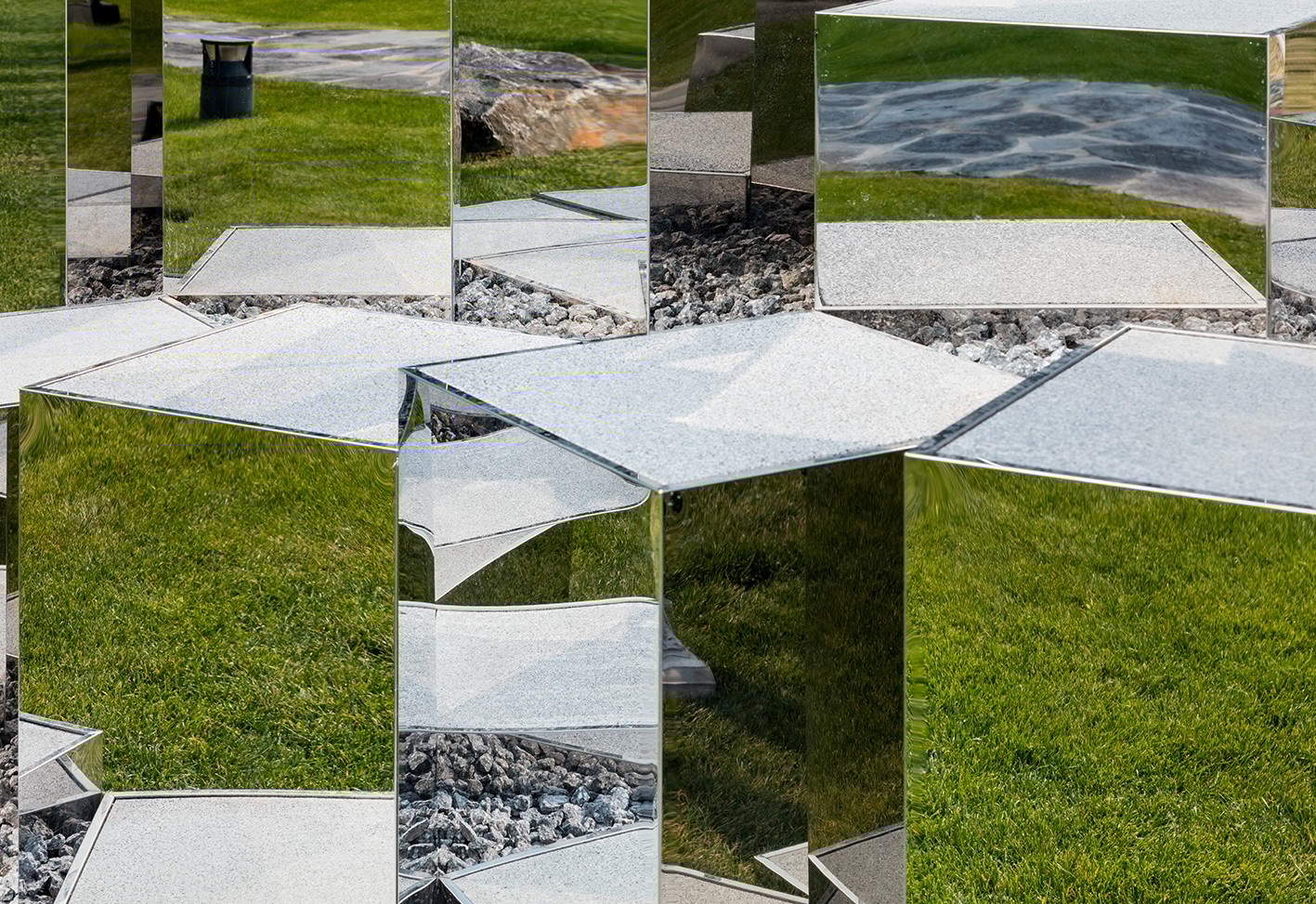
25 Steps | 25 계단, 2016년
서광다원의 부드럽고 연속적인 경사는 걷는 동안 거의 인지되지 않을 만큼 미묘한 높낮이 변화를 품고 있다. ‹25 Steps›는 이 매끄러운 지형에 의도적 단절을 만들며, 제주석 바닥을 들어 올려 그 사이로 녹차밭의 풍경을 끼워 넣는 개입이다. 25개의 떠 있는 듯한 디딤판은 주변 경관을 반사하며 자연의 리듬을 잠시 멈추고, 방문자에게 장소를 다시 인식하게 하는 작은 전환점을 만든다. 이 작업은 2012년 서광다원에서 처음 설치된 이후, 2016년에는 연세대학교 캠퍼스로 옮겨 설치되며 장소에 따른 해석을 확장했다.
이 조형적 균열은 걷는 이의 시선과 속도를 미묘하게 바꾸어, 익숙한 지형의 곡선을 새로운 단면처럼 드러내게 한다. ‹25 Steps›는 자연과 인공의 대비 속에서 경관을 재프레이밍하는 장치로 작동하며, 설치 장소가 달라질 때마다 주변 환경과의 관계를 새롭게 구축해 자연·예술·사람이 교차하는 다층적 공간 경험을 만들어낸다.
The gentle, continuous slopes of Seogwang tea fields hold subtle elevation shifts that often go unnoticed while walking. "25 Steps" introduces a deliberate rupture into this smooth terrain by lifting segments of the stone ground and inserting fragments of the tea-field landscape between them. The 25 hovering plates reflect their surroundings, interrupting the natural rhythm and prompting visitors to re-perceive the site. Originally installed at Seogwang Tea Garden in 2012, the work was later reinstalled at Yonsei University in 2016, expanding its interpretation across different contexts.
This controlled disruption subtly shifts one's gaze and pace, revealing familiar curves as if cut into a new section. "25 Steps" functions as a device that reframes the landscape through the tension between nature and construction, creating a layered spatial experience that transforms with each new site and its surrounding environment.
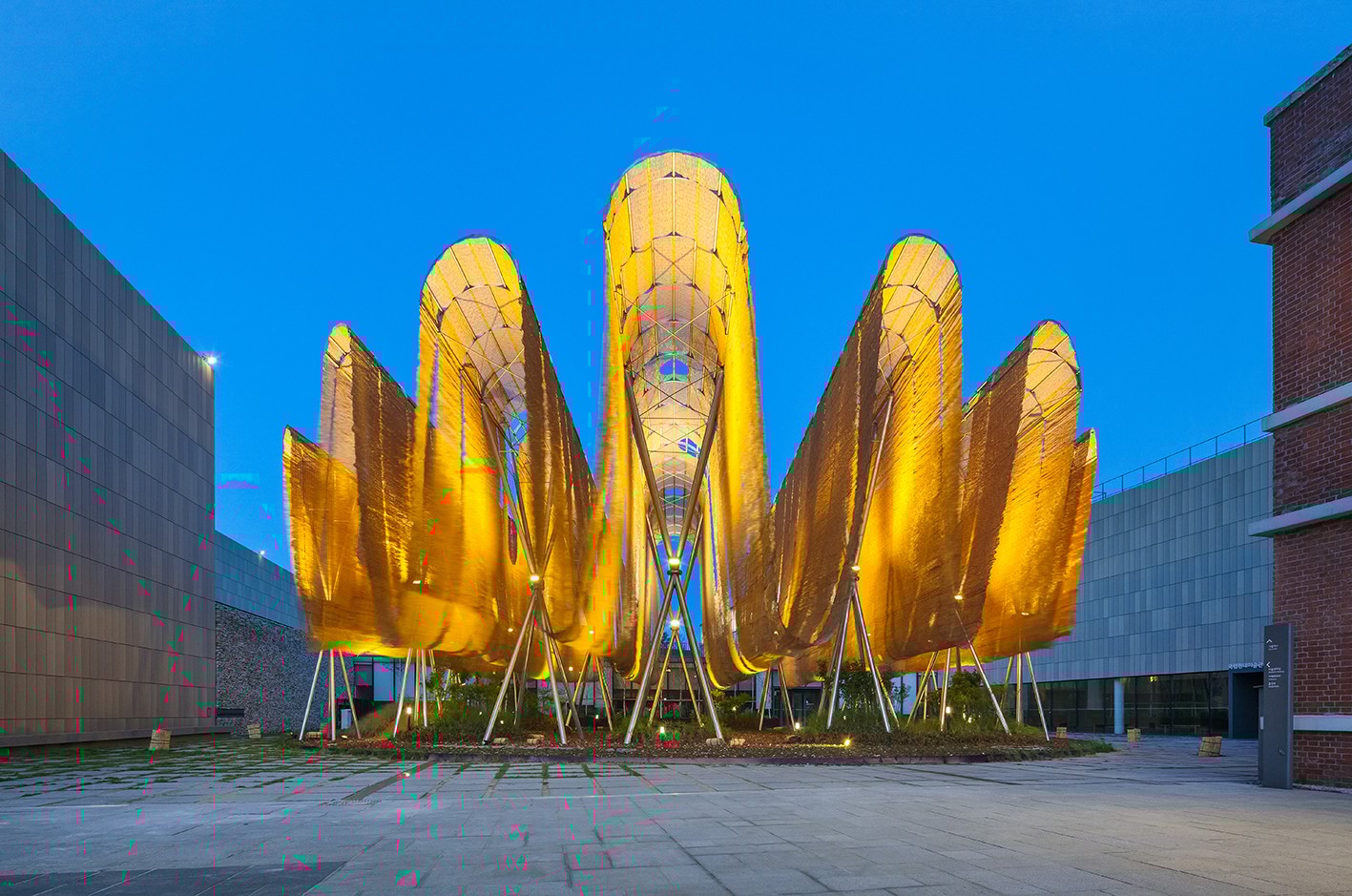
Roof Sentiment | 지붕감각, 2015
전통건축이 경복궁의 풍경에서 가장 강렬하게 드러내는 것은 지붕이다. 땅에 고정되지 않은 기둥을 보완하기 위해 두껍고 무겁게 만들어진 한옥의 지붕은, 내부에서는 구조가 그대로 드러나고 외부에서는 산세와 맞물려 경관을 형성했다. 높은 지붕과 천장은 빛과 바람의 감각이 머무는 공간이었고, ‘어스름’이나 ‘서늘함’처럼 쉽게 정의할 수 없는 미묘한 기운을 품었다. 그러나 기술 발달과 함께 지붕은 점차 얇고 평평해졌고, 위로 층이 쌓이며 지붕이 만들어내던 감각은 사라졌다.
‘지붕감각’은 이러한 기억을 불러내기 위해 주름지고 과장된 지붕 형태를 새롭게 구성한 설치 작업이다. 갈대발을 널어 매다는 방식으로 지붕을 만들고, 그 아래에 바람과 빛이 통과하는 틈을 마련하여 지붕이 과거에 담았던 감각적 경험을 되살린다. 흔들리는 갈대발, 그 사이로 스며드는 햇살, 주름 사이로 이루어지는 차경(借景)은 경복궁이라는 장소성과 여름이라는 계절이 만들어내는 감각을 정교하게 드러낸다. ‘지붕감각’은 단순한 쉼터가 아니라, 지붕이라는 건축 요소가 한때 일상 속에서 깨워냈던 감각을 다시 질문하는 공간적 장치로 작동한다.
In the traditional architecture of Gyeongbokgung, the roof is the most visually dominant element. Built heavy and thick to compensate for columns that were not fixed into the ground, the Korean roof revealed its structural logic internally while forming a harmonious silhouette with the surrounding mountains externally. High roofs and lofty ceilings once held subtle atmospheres—light, breeze, dusk-like dimness, and coolness—sensations that resisted precise definition. As construction technologies advanced, roofs became thinner and flatter, layered over with additional floors, and the sensory qualities once carried by the ceiling gradually disappeared.
“Roof Sentiment” revisits these lost experiences by reconstructing an exaggerated, pleated roof as an architectural device. Using suspended reed blinds to form the roof, the installation allows wind, sunlight, and shifting shadows to penetrate and animate the space beneath. The trembling reeds, the filtered light, and the framed glimpses between the folds collectively revive the atmospheric qualities once inherent to Korean roofs. Situated within Gyeongbokgung and attuned to the season of summer, the work functions not merely as a shelter but as a spatial and climatic apparatus that reawakens the sensory memory of what a roof once meant.
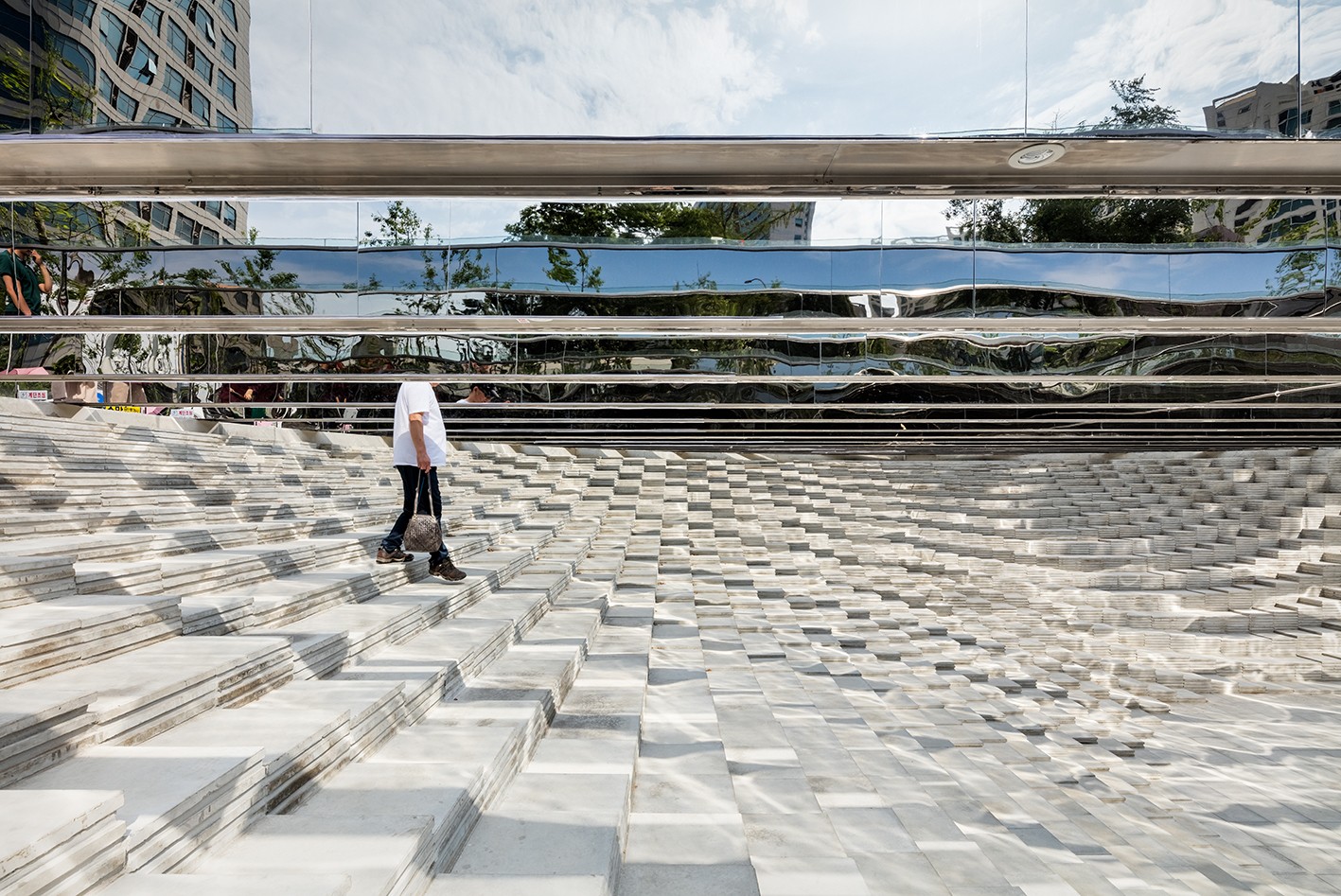
Yoonseul | 윤슬, 2017
‘윤슬’은 만리동의 오래된 지형과 주변 건축물, 일상의 흐름을 반사와 파동의 표면 위에 새롭게 드러내는 시각적 장치이자, 다양한 창작 활동을 수용하는 열린 플랫폼이다. 스테인리스 스틸로 이루어진 얇은 플랫폼은 주변의 빛과 움직임을 반복적으로 비추고 흔들어 익숙한 도시 장면을 낯설고 생동하는 모습으로 전환한다. 이러한 반사 구조는 날씨와 시간의 변화에 따라 전혀 다른 표정과 공간적 분위기를 만들어내며, 도시가 스스로를 재구성하도록 돕는다. 윤슬은 단순히 ‘보게 하는’ 조형물이 아니라, 머물고 점유할 수 있는 도시의 비워진 장소로서 창작적 행위와 도시 경험을 동시에 담아내는 장치이다.
특히 보행도로로 전환된 서울로 7017과의 관계는 이 작업의 의미를 강화한다. 새로운 높이에 형성된 보행자의 시선은 윤슬의 표면 위에서 증폭되고 굴절되며, 만리동 공원으로 이어지는 도시 풍경을 다층적으로 경험하게 한다. 관람자는 작품의 내부로 자연스럽게 걸어 들어가며 외부와 내부가 겹쳐지는 반사 현상을 체감하고, 중심의 비워진 공간에서 머물며 또 다른 도시의 상(像)을 마주한다. 낮에는 도시를 비추는 거울로, 밤에는 내부를 밝히는 광학 장치로 변모하는 윤슬은, 변화하는 도시의 시간을 담아내는 입체적·유동적·보행자 중심의 도시 광학 플랫폼으로 기능한다.
"Yoonseul" is a visual apparatus that reveals the old terrain of Manridong, surrounding architecture, and everyday movements through a reflective, wave-like surface—while simultaneously serving as an open platform for creative and communal activity. The thin stainless-steel plane captures light and motion, transforming familiar urban scenes into shifting, animated images. Its reflective behavior changes constantly with weather and time, producing an ever-evolving spatial atmosphere. Rather than a static object to be viewed, Yoonseul becomes an inhabitable void, a place to stay, occupy, and reinterpret the city through layered reflections.
The project gains deeper resonance through its relationship with Seoullo 7017, the elevated pedestrian walkway. From this new height, the pedestrian’s gaze is amplified across Yoonseul’s surface, offering a multi-perspective reading of Manridong Park and the surrounding urban fabric. Visitors naturally walk into the installation, experiencing the overlap of interior and exterior reflections and encountering a quiet, open space at its center. By day, Yoonseul mirrors the city; by night, it becomes an illuminated optical device. In this way, it operates as a dynamic, temporal, pedestrian-centered optical platform that reframes the city through reflection, movement, and time.
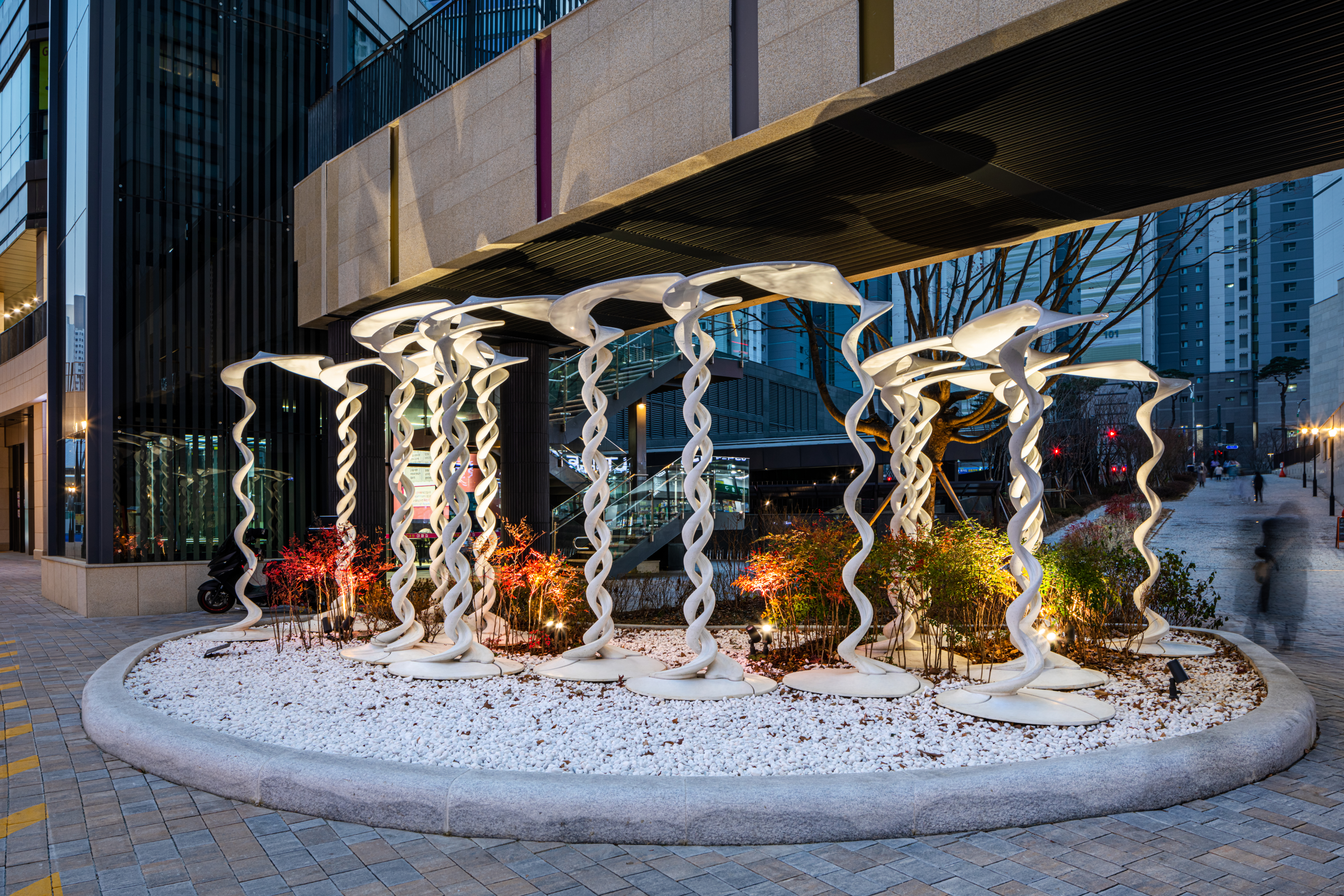
Rain Chain Forest | 레인 체인 포레스트, 2021
‘레인 체인 포레스트’는 비를 배제하고 막아내는 데 집중해온 건축의 오랜 태도에 균열을 내며, 비가 오는 순간의 감각을 온전히 드러낼 수 있는 구조를 만들고자 한 실험적 작업이다. SoA는 전통적인 레인 체인(rain chain) 장치를 확장하여, 물이 떨어지고 흘러내리는 과정을 시각적·청각적 경험으로 전환함으로써, 건축이 비를 ‘차단하는 존재’가 아니라 ‘비의 표정을 보여주는 매개’가 될 수 있음을 제안한다. 관람자는 구조물을 따라 흐르는 물의 리듬과 소리를 통해, 비 오는 날만이 가진 특유의 분위기와 시간성을 새로운 방식으로 체감하게 된다.
"Rain Chain Forest" challenges architecture’s long-held defensive stance of keeping rain out, proposing instead a structure that reveals and amplifies the sensory qualities of rainfall. Expanding upon the idea of the traditional rain chain, SoA transforms the path of falling water into a visual and acoustic experience, allowing architecture to act not as a shield against rain but as a medium that makes its presence visible. Through the movement, rhythm, and sound of water traveling through the installation, visitors encounter the distinct atmosphere and temporality that only a rainy day can offer.
Destructive Creation | 파괴적 창조, 2023
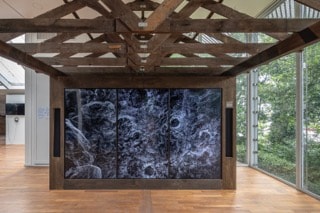
파괴적 창조’는 더 이상 거주로 사용되지 않는 중소도시의 빈집에 최소한의 개입을 가해, 내부와 외부의 경계를 서서히 흐리게 만드는 프로젝트이다. SoA는 지붕·벽·바닥에 미세한 개구를 더하는 방식으로 바람과 빛, 비와 식생이 건물 내부로 스며드는 경로를 열어주며, 건축이 풍화를 받아들이며 자연으로 되돌아가는 시간을 촉발한다. 이는 파괴가 아닌 ‘살짝 덜어냄’을 통해 장소가 지닌 생태적 잠재력을 회복시키는 실험이기도 하다.
이 프로젝트는 2023 베니스 건축비엔날레 한국관에서 발표된 작업으로, 인간의 거주가 멈춘 집이 시간·기후·자연과의 상호작용 속에서 어떻게 다시 ‘서식지’로 변모할 수 있는지를 탐구한다. SoA는 건축을 보존하거나 폐기하는 이분법을 넘어, 건물의 풍화 과정을 하나의 생태적 재생 방식으로 바라보는 새로운 관점을 제시한다.
"Destructive Creation" is a project that introduces minimal interventions to abandoned houses in small and mid-sized cities, gradually softening the boundary between inside and outside. Through subtle openings in roofs, walls, and floors, SoA allows wind, light, rain, and vegetation to slowly enter the structure, initiating a process in which architecture accepts weathering and begins to return to nature. Rather than demolishing or replacing the building, the project restores its ecological potential through gentle subtraction.
This work was presented as the Korean Pavilion project at the 2023 Venice Architecture Biennale, examining how dwellings that have ceased to function as human homes can, through time, climate, and natural forces, transform into new habitats. SoA proposes an alternative lens on architecture—one that sees weathering not as decline but as a viable mode of ecological regeneration.
© 2025 M Gallery. All rights reserved.

Artists
SoA
SoA (이치훈, 강예린)
SoA (Chihoon Lee, Yerin Kang)
Introduction
SoA (이치훈, 강예린)
SoA(Society of Architecture)는 건축가 이치훈과 강예린으로 구성된 듀오로, 건축을 기반으로 하면서도 이를 조형적·예술적 매체로 확장하는 작가적 실천을 지속해 왔다. 두 작가는 구조와 공간, 시간성과 장소의 서사를 탐구하며, 건축적 사고를 설치·조형·전시 형태로까지 확장한다. SoA의 작업은 도시와 풍경 속에 잠재된 장면을 재구성하며, 건축이 예술적 언어로 작동할 수 있는 새로운 가능성을 제시한다. 이치훈과 강예린은 건축가이자 작가로서의 이중적 관점을 통해 동시대 건축과 예술의 경계를 섬세하게 넘나드는 작업을 이어가고 있다.
SoA (Chihoon Lee, Yerin Kang)
SoA (Society of Architecture) is composed of architects Chihoon Lee and Yerin Kang, a duo whose practice approaches architecture as both a disciplinary foundation and an artistic medium. Together, they investigate structure, spatial narrative, and the temporal layers of place, extending architectural thinking into sculptural, installation, and exhibition formats. Their work reconfigures latent scenes within the city and landscape, proposing new possibilities for architecture to function as an expressive artistic language. As architects and artists, Lee and Kang cultivate a dual perspective that allows SoA to move fluidly across the boundaries between art and architecture.

Biography
SoA는 2010년 서울에서 설립된 젊은 건축가 그룹으로, 도시와 건축의 사회적 조건을 분석하며 다양한 규모의 구축 환경을 탐구해 왔다. 현대적인 삶에 대한 이해를 바탕으로 그것이 더욱 풍요로워질 수 있는 건축의 새로운 가능성을 믿고 추구한다.
이를 위해 사회적 기술로서의 도시계획, 산업 구조의 일부로서의 재료와 기술로서의 건축을 진지하게 탐구하며, 도시사회학, 정치지리, 역사, 미술 등 건축 내외부의 분야와 협업한다. 건축뿐 아니라 가구, 인테리어, 공공예술, 리서치, 출판, 연출, 글쓰기, 도시계획 등 다양한 형식으로 건축적인 고민을 실천하고 있다.
우포 자연도서관(2013), 남가좌동 공유주택 The Rabbit(2015), 성평등 도서관(2015)을 통해 2015년 문화체육관광부와 새건축사협의회가 주최한 '젊은 건축가상'을 수상하였다. 2015년 현대카드, 뉴욕현대미술관(MoMA), 국립현대미술관(MMCA)이 주관한 '젊은 건축가 프로그램'(YAP)의 우승자로 선정되었으며, 당선작 '지붕감각'을 통해 2016년 「아키텍처럴 리뷰」 주관 Emerging Architecture Award의 파이널리스트로 선정되었다. '생각이섬'으로 김수근건축상 프리뷰상(2016)을, '브릭웰'로 코리아디자인어워드(2020)와 서울시건축상 최우수상(2020), 한국건축역사학회 작품상(2023) 등을 수상했다.
국립현대미술관, 서울시립미술관, 아르코미술관, 광주디자인비엔날레, 아모레퍼시픽미술관, 이탈리아 국립21세기미술관(MAXXI), 안양공공예술제 등에서 개최된 국내외 주요 전시에 참여해왔다. 2017년 서울도시건축비엔날레의 '생산도시' 섹션에 큐레이터로 참여하였으며, 2023년 베니스 비엔날레 국제건축전 한국관 작가로 초청되었다. 저서로는 「도서관 산책자」(2012, 반비), 「(협업자들)(고안하는 손)(허용오차)」(2024, SoAlab), 「파괴적 창조: 소멸의 디자인을 위한 워크숍」(2025, 프로파간다)이, 공저로는 「세 도시 이야기」(2014, G&Press), 「확장도시 인천」(2016, 마티), 「아파트 글자」(2016, 사월의눈)가 있다.
Founded in 2010 in Seoul, Society of Architecture (SoA) is a young group of architects working on projects about built environment at various scales, based on the analysis of the social conditions of architecture and urbanism. Based on understanding of contemporary life, we are searching for new possibilities in architecture that can make it more enriching.
For this, SoA practices architectural thinking not only through architecture itself, but also through various forms such as furniture, interior design, public art, research, publication, direction, writing, urban planning, and many other ways by studying urbanism as a social technique, materials as part of industrial structures, and architecture as a form of technology. Also, by participating in collaborations across disciplines within architecture, including urban sociology, political geography, history, art, and beyond.
SoA was recognized in the 2015 Young Architects Award, organized by the Ministry of Culture and the Korea Architects Institute, for Upo Nature Library (2015), The Rabbit (2015), and the Gender Equality Policy Expert Library (2013). That same year, SoA was selected as the winner of the 2015 Young Architects Program (YAP), jointly organized by MMCA, MoMA, and Hyundai Card Co., Ltd. In 2016, SoA was nominated as a finalist for the AR Emerging Architecture Awards with their YAP-winning project, Roof Sentiment. Also in 2016, Sayou: Living and Thinking in Architecture received the Kim Swoo Geun Preview Award. Brickwell received the Korea Design Award (2020), the Seoul Architecture Award (2020), and the Korean Association for Architectural History Design Award (2023).
SoA has participated in numerous exhibitions at the Venice Biennale, Gwangju Design Biennale, MAXXI, MMCA, Seoul Museum of Art, and so on. In 2017, SoA curated the Producing City section of the Seoul Biennale of Architecture and Urbanism and was an invited artist for the Korean Pavilion at the 2023 Venice Biennale. SoA's publications include Flâneurs of Libraries (2012), A Tale of Three Cities (2014), Expansion City, Incheon (2015), Apartment Letters (2016), and Destructive Creation: Workshop on Designing for Zero (2025).
Selected Works
25 Steps | 25 계단, 2016년
서광다원의 부드럽고 연속적인 경사는 걷는 동안 거의 인지되지 않을 만큼 미묘한 높낮이 변화를 품고 있다. ‹25 Steps›는 이 매끄러운 지형에 의도적 단절을 만들며, 제주석 바닥을 들어 올려 그 사이로 녹차밭의 풍경을 끼워 넣는 개입이다. 25개의 떠 있는 듯한 디딤판은 주변 경관을 반사하며 자연의 리듬을 잠시 멈추고, 방문자에게 장소를 다시 인식하게 하는 작은 전환점을 만든다. 이 작업은 2012년 서광다원에서 처음 설치된 이후, 2016년에는 연세대학교 캠퍼스로 옮겨 설치되며 장소에 따른 해석을 확장했다.
이 조형적 균열은 걷는 이의 시선과 속도를 미묘하게 바꾸어, 익숙한 지형의 곡선을 새로운 단면처럼 드러내게 한다. ‹25 Steps›는 자연과 인공의 대비 속에서 경관을 재프레이밍하는 장치로 작동하며, 설치 장소가 달라질 때마다 주변 환경과의 관계를 새롭게 구축해 자연·예술·사람이 교차하는 다층적 공간 경험을 만들어낸다.
The gentle, continuous slopes of Seogwang tea fields hold subtle elevation shifts that often go unnoticed while walking. "25 Steps" introduces a deliberate rupture into this smooth terrain by lifting segments of the stone ground and inserting fragments of the tea-field landscape between them. The 25 hovering plates reflect their surroundings, interrupting the natural rhythm and prompting visitors to re-perceive the site. Originally installed at Seogwang Tea Garden in 2012, the work was later reinstalled at Yonsei University in 2016, expanding its interpretation across different contexts.
This controlled disruption subtly shifts one's gaze and pace, revealing familiar curves as if cut into a new section. "25 Steps" functions as a device that reframes the landscape through the tension between nature and construction, creating a layered spatial experience that transforms with each new site and its surrounding environment.
Roof Sentiment | 지붕감각, 2015
전통건축이 경복궁의 풍경에서 가장 강렬하게 드러내는 것은 지붕이다. 땅에 고정되지 않은 기둥을 보완하기 위해 두껍고 무겁게 만들어진 한옥의 지붕은, 내부에서는 구조가 그대로 드러나고 외부에서는 산세와 맞물려 경관을 형성했다. 높은 지붕과 천장은 빛과 바람의 감각이 머무는 공간이었고, ‘어스름’이나 ‘서늘함’처럼 쉽게 정의할 수 없는 미묘한 기운을 품었다. 그러나 기술 발달과 함께 지붕은 점차 얇고 평평해졌고, 위로 층이 쌓이며 지붕이 만들어내던 감각은 사라졌다.
‘지붕감각’은 이러한 기억을 불러내기 위해 주름지고 과장된 지붕 형태를 새롭게 구성한 설치 작업이다. 갈대발을 널어 매다는 방식으로 지붕을 만들고, 그 아래에 바람과 빛이 통과하는 틈을 마련하여 지붕이 과거에 담았던 감각적 경험을 되살린다. 흔들리는 갈대발, 그 사이로 스며드는 햇살, 주름 사이로 이루어지는 차경(借景)은 경복궁이라는 장소성과 여름이라는 계절이 만들어내는 감각을 정교하게 드러낸다. ‘지붕감각’은 단순한 쉼터가 아니라, 지붕이라는 건축 요소가 한때 일상 속에서 깨워냈던 감각을 다시 질문하는 공간적 장치로 작동한다.
In the traditional architecture of Gyeongbokgung, the roof is the most visually dominant element. Built heavy and thick to compensate for columns that were not fixed into the ground, the Korean roof revealed its structural logic internally while forming a harmonious silhouette with the surrounding mountains externally. High roofs and lofty ceilings once held subtle atmospheres—light, breeze, dusk-like dimness, and coolness—sensations that resisted precise definition. As construction technologies advanced, roofs became thinner and flatter, layered over with additional floors, and the sensory qualities once carried by the ceiling gradually disappeared.
“Roof Sentiment” revisits these lost experiences by reconstructing an exaggerated, pleated roof as an architectural device. Using suspended reed blinds to form the roof, the installation allows wind, sunlight, and shifting shadows to penetrate and animate the space beneath. The trembling reeds, the filtered light, and the framed glimpses between the folds collectively revive the atmospheric qualities once inherent to Korean roofs. Situated within Gyeongbokgung and attuned to the season of summer, the work functions not merely as a shelter but as a spatial and climatic apparatus that reawakens the sensory memory of what a roof once meant.
Yoonseul | 윤슬, 2017
‘윤슬’은 만리동의 오래된 지형과 주변 건축물, 일상의 흐름을 반사와 파동의 표면 위에 새롭게 드러내는 시각적 장치이자, 다양한 창작 활동을 수용하는 열린 플랫폼이다. 스테인리스 스틸로 이루어진 얇은 플랫폼은 주변의 빛과 움직임을 반복적으로 비추고 흔들어 익숙한 도시 장면을 낯설고 생동하는 모습으로 전환한다. 이러한 반사 구조는 날씨와 시간의 변화에 따라 전혀 다른 표정과 공간적 분위기를 만들어내며, 도시가 스스로를 재구성하도록 돕는다. 윤슬은 단순히 ‘보게 하는’ 조형물이 아니라, 머물고 점유할 수 있는 도시의 비워진 장소로서 창작적 행위와 도시 경험을 동시에 담아내는 장치이다.
특히 보행도로로 전환된 서울로 7017과의 관계는 이 작업의 의미를 강화한다. 새로운 높이에 형성된 보행자의 시선은 윤슬의 표면 위에서 증폭되고 굴절되며, 만리동 공원으로 이어지는 도시 풍경을 다층적으로 경험하게 한다. 관람자는 작품의 내부로 자연스럽게 걸어 들어가며 외부와 내부가 겹쳐지는 반사 현상을 체감하고, 중심의 비워진 공간에서 머물며 또 다른 도시의 상(像)을 마주한다. 낮에는 도시를 비추는 거울로, 밤에는 내부를 밝히는 광학 장치로 변모하는 윤슬은, 변화하는 도시의 시간을 담아내는 입체적·유동적·보행자 중심의 도시 광학 플랫폼으로 기능한다.
"Yoonseul" is a visual apparatus that reveals the old terrain of Manridong, surrounding architecture, and everyday movements through a reflective, wave-like surface—while simultaneously serving as an open platform for creative and communal activity. The thin stainless-steel plane captures light and motion, transforming familiar urban scenes into shifting, animated images. Its reflective behavior changes constantly with weather and time, producing an ever-evolving spatial atmosphere. Rather than a static object to be viewed, Yoonseul becomes an inhabitable void, a place to stay, occupy, and reinterpret the city through layered reflections.
The project gains deeper resonance through its relationship with Seoullo 7017, the elevated pedestrian walkway. From this new height, the pedestrian’s gaze is amplified across Yoonseul’s surface, offering a multi-perspective reading of Manridong Park and the surrounding urban fabric. Visitors naturally walk into the installation, experiencing the overlap of interior and exterior reflections and encountering a quiet, open space at its center. By day, Yoonseul mirrors the city; by night, it becomes an illuminated optical device. In this way, it operates as a dynamic, temporal, pedestrian-centered optical platform that reframes the city through reflection, movement, and time.
Rain Chain Forest | 레인 체인 포레스트, 2021
‘레인 체인 포레스트’는 비를 배제하고 막아내는 데 집중해온 건축의 오랜 태도에 균열을 내며, 비가 오는 순간의 감각을 온전히 드러낼 수 있는 구조를 만들고자 한 실험적 작업이다. SoA는 전통적인 레인 체인(rain chain) 장치를 확장하여, 물이 떨어지고 흘러내리는 과정을 시각적·청각적 경험으로 전환함으로써, 건축이 비를 ‘차단하는 존재’가 아니라 ‘비의 표정을 보여주는 매개’가 될 수 있음을 제안한다. 관람자는 구조물을 따라 흐르는 물의 리듬과 소리를 통해, 비 오는 날만이 가진 특유의 분위기와 시간성을 새로운 방식으로 체감하게 된다.
"Rain Chain Forest" challenges architecture’s long-held defensive stance of keeping rain out, proposing instead a structure that reveals and amplifies the sensory qualities of rainfall. Expanding upon the idea of the traditional rain chain, SoA transforms the path of falling water into a visual and acoustic experience, allowing architecture to act not as a shield against rain but as a medium that makes its presence visible. Through the movement, rhythm, and sound of water traveling through the installation, visitors encounter the distinct atmosphere and temporality that only a rainy day can offer.
Destructive Creation | 파괴적 창조, 2023
파괴적 창조’는 더 이상 거주로 사용되지 않는 중소도시의 빈집에 최소한의 개입을 가해, 내부와 외부의 경계를 서서히 흐리게 만드는 프로젝트이다. SoA는 지붕·벽·바닥에 미세한 개구를 더하는 방식으로 바람과 빛, 비와 식생이 건물 내부로 스며드는 경로를 열어주며, 건축이 풍화를 받아들이며 자연으로 되돌아가는 시간을 촉발한다. 이는 파괴가 아닌 ‘살짝 덜어냄’을 통해 장소가 지닌 생태적 잠재력을 회복시키는 실험이기도 하다.
이 프로젝트는 2023 베니스 건축비엔날레 한국관에서 발표된 작업으로, 인간의 거주가 멈춘 집이 시간·기후·자연과의 상호작용 속에서 어떻게 다시 ‘서식지’로 변모할 수 있는지를 탐구한다. SoA는 건축을 보존하거나 폐기하는 이분법을 넘어, 건물의 풍화 과정을 하나의 생태적 재생 방식으로 바라보는 새로운 관점을 제시한다.
"Destructive Creation" is a project that introduces minimal interventions to abandoned houses in small and mid-sized cities, gradually softening the boundary between inside and outside. Through subtle openings in roofs, walls, and floors, SoA allows wind, light, rain, and vegetation to slowly enter the structure, initiating a process in which architecture accepts weathering and begins to return to nature. Rather than demolishing or replacing the building, the project restores its ecological potential through gentle subtraction.
This work was presented as the Korean Pavilion project at the 2023 Venice Architecture Biennale, examining how dwellings that have ceased to function as human homes can, through time, climate, and natural forces, transform into new habitats. SoA proposes an alternative lens on architecture—one that sees weathering not as decline but as a viable mode of ecological regeneration.
© 2025 M Gallery. All rights reserved.